

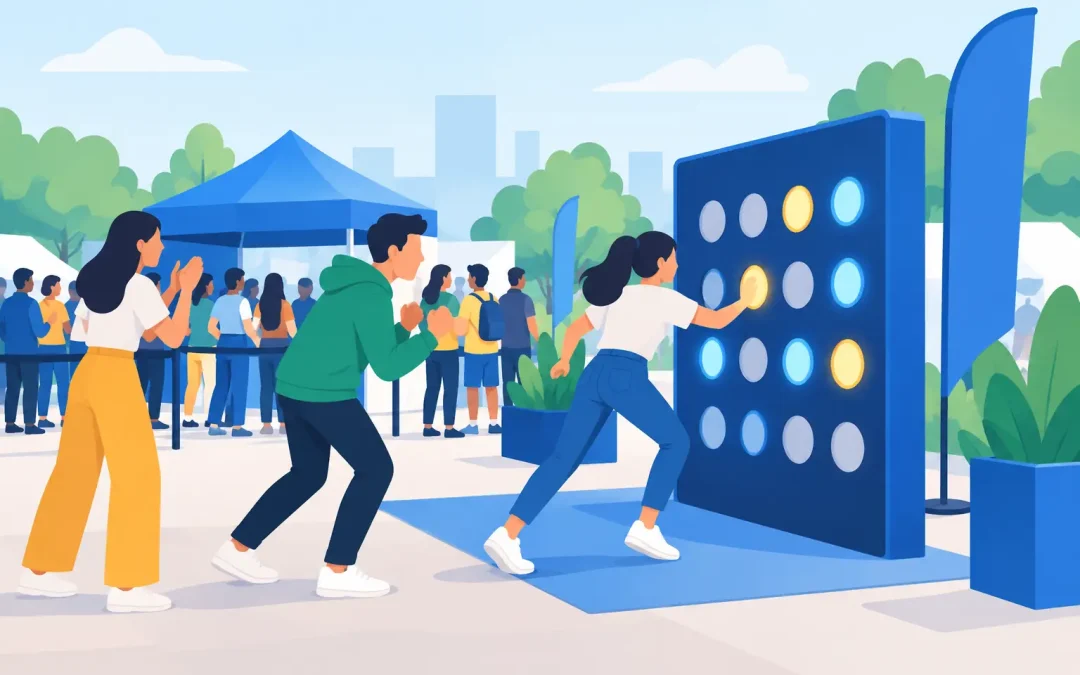
A branded tote bag can disappear into the crowd. A roaring arcade challenge, a queue around a prize claw machine or a photo booth packed with mates gives people a reason to stop, play and remember who brought the fun. The best activation campaign examples do more than display a logo – they turn brand messages into moments people actively choose to join.
For Melbourne marketers, event organisers and venue teams, that matters. A good activation has to earn attention in a busy shopping centre, festival, trade show, campus event or public space. It also needs to be practical: quick to understand, suitable for the audience, safely operated and worthwhile for the brand once the event wraps up.
Activation campaign examples built for participation
The strongest ideas match the activity to one clear outcome. That could be collecting qualified leads, launching a new product, creating social content, rewarding loyal customers or bringing energy to a staff event. Here are ten ways interactive event hire can make that happen.
1. The branded arcade high-score challenge
Set up a classic arcade game, racing game or sports game and invite guests to chase the daily high score. Add branded artwork to the machine surround, a leaderboard and a prize for the top score at set times.
This works because the goal is instantly clear. People can play in under a minute, spectators understand what is happening, and a near-win often brings players back for another go. It is particularly effective for sports brands, automotive campaigns, technology launches and university open days.
Keep the entry process light. Ask for a name and mobile number only if the prize and follow-up value justify it. For a pure awareness activation, display scores using first names or nicknames and let the crowd do the promoting.
2. A claw machine filled with campaign prizes
A custom-branded claw machine is one of the simplest ways to put a product or promotion directly into people’s hands. Fill it with samples, vouchers, branded merchandise or a mix of small prizes and a few high-value wins.
The trade-off is prize management. If every guest wins a premium item, costs can climb quickly. If the claw is too difficult, the fun disappears. A well-planned prize mix gives guests a genuine chance while keeping the campaign budget in check. Clear terms and a team member nearby also help the queue move smoothly.
3. The photo booth with a reason to share
Photo booths become activation assets when the photo itself feels worth keeping. Build the experience around a themed backdrop, props that suit the campaign and a branded print or digital frame. For a product launch, the set can recreate the world the product belongs in, rather than simply putting a logo behind guests.
A beauty brand might create a colourful glam station. A travel campaign could build a holiday-style scene. A local event can use recognisable Melbourne-inspired props. The point is to give people a fun story to tell in one image.
Consider privacy before making social sharing a requirement. Offer guests a simple opt-in for marketing, and make sure the experience is still enjoyable for those who only want a print for their fridge.
4. Head-to-head racing for product launches
Two-player racing games are made for competitive activations. They create movement, noise and a natural gathering point, particularly when a host calls out close finishes or runs short tournament rounds.
This idea suits automotive, insurance, gaming, transport and performance-focused brands, but it can be adapted for almost anything. A new drink launch might run a fastest-lap challenge with product sampling at the finish line. A corporate roadshow can use races to start conversations between staff and visitors.
Allow enough floor space for queues and spectators. A great game tucked into a corner loses much of its impact. Position it where people can see the action before they decide to take part.
5. The pop-up game zone at a community event
At a council festival, school fete or family day, a branded game zone can create goodwill without feeling like a hard sell. Combine a jumping castle, sports game, arcade machine and food attraction under one clearly signed area, with activities suited to different ages.
This approach is less about one-on-one lead capture and more about being the organisation that made the day better. Banks, property developers, health providers and local businesses often benefit from this longer-term association, especially when their brand has a genuine local connection.
It does require thoughtful planning. Supervision, access, weather contingencies, power requirements and safe placement all matter. Choose equipment that has been maintained and inspected, and work with an experienced provider that can advise on what will fit the space and the audience.
6. Spin-to-win with a useful conversation starter
A prize wheel is familiar, fast and effective, but the best version has a purpose beyond handing out lollies. Before each spin, ask one campaign-relevant question. It could be a short quiz, a preference question or a prompt that introduces a product benefit.
For example, an energy provider could ask guests what they look for in a home plan before they spin. A health campaign could use simple myth-or-fact prompts. The interaction gives brand staff a natural opening without forcing people into a long sales chat.
Keep questions easy enough for a public event. If participants feel tested rather than entertained, they will walk on by.
7. Karaoke that puts customers in the spotlight
Karaoke is a bold choice, which is exactly why it can cut through at staff events, university activations and nightlife-focused campaigns. Run it as an open stage, a battle between teams or a timed challenge where participants perform a chorus to win prizes.
The brand does not need to dominate every lyric or screen. A tasteful branded stage backdrop, host introduction and prize moment are usually enough. The real value comes from confidence, laughter and the crowd that forms around each performance.
This campaign is audience-dependent. It shines where people are ready to be social, but it is not the right fit for a quiet professional conference or a setting where guests need more privacy.
8. A branded food moment people queue for
Popcorn, fairy floss, slushies and soft serve can turn a standard sampling station into a memorable stop. Branded cups, colours and signage tie the food to the campaign, while the aroma and visual appeal pull people in from across the event.
Food-based activations work especially well at outdoor events and family occasions, where a quick treat feels like a genuine reward. They can also support a bigger interaction: complete a game, take a photo or join the mailing list, then collect your treat.
Be realistic about service speed. A long queue can build buzz, but a queue that barely moves can frustrate guests. Match the menu and staffing to expected attendance.
9. The workplace tournament that builds team spirit
Not every activation is public-facing. For internal launches, milestone celebrations or staff wellbeing days, a tournament with pinball, arcade games, sumo suits or sports challenges gives employees a shared reason to step away from their desks.
Build teams across departments and give the event a simple theme. Add a leaderboard and small prizes, but avoid making it so competitive that less confident staff opt out. The best workplace activations have room for spectators, casual players and the colleague who only joins in after lunch.
10. The multi-stop event passport
For a larger footprint, create several short activity stations and give guests an event passport. They might take a photo, set a racing score, answer a question and collect a snack before redeeming the completed passport for a final prize.
This format is useful when you need to introduce several product messages or sponsors without overwhelming visitors at one stand. It also spreads crowds across the space. Just make each stop genuinely enjoyable, not a disguised form to complete.
How to choose the right activation format
Start with the behaviour you want. If you need hundreds of quick interactions, choose an activity people understand at a glance, such as a claw machine, prize wheel or photo booth. If you want longer conversations with fewer, more qualified guests, a tournament or guided game challenge creates more time for brand staff to engage.
Then consider the event environment. Indoor venues may favour arcade games, karaoke and photo booths, while open-air festivals can support larger family attractions and food stations. Power access, bump-in timing, floor load, entry points and wet-weather plans should be discussed well before event day.
Branding should support the fun, not smother it. A custom-wrapped arcade machine or branded photo print can do plenty of work without turning every surface into an advertisement. Xtreme Events Group can help organisers pair interactive entertainment with custom branding that suits the campaign, venue and expected crowd.
Finally, decide how success will be measured before the first guest arrives. Depending on the goal, track plays, queue length, entries, opt-ins, samples distributed, content created, staff conversations or return visits. A QR code can help, but it should never be the whole experience. People remember how the activation made them feel first, and the scan comes second.
The campaign people talk about on the way home is rarely the one with the biggest banner. It is the one that gave them a laugh, a challenge, a prize or a photo worth keeping – and made the brand behind it part of a great day.