

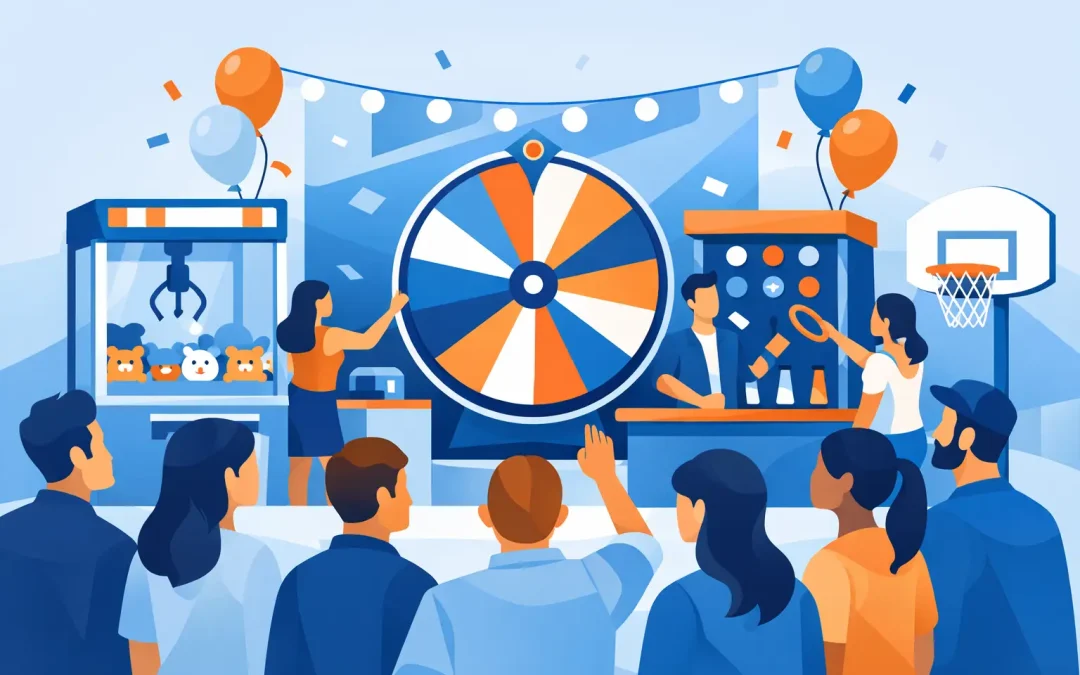
A branded coffee cup can disappear into the crowd. A branded game that gets people cheering, competing and snapping photos gives them a reason to stop. That is the difference branded event activation games can make at a Melbourne launch, trade event, festival or staff celebration. They turn a logo into a lived experience – and give your audience something far better than another flyer to take home.
The best activations are not built around decoration alone. They give people a clear invitation: have a go, beat the score, win a prize, bring a mate. When the entertainment is familiar, easy to play and visibly connected to your campaign, your stand can become the spot people talk about long after the event wraps up.
Why games work harder than a giveaway
Giveaways can be useful, especially when they are practical and well matched to the audience. But a tote bag or pen asks very little of people. A game creates a small moment of commitment. Players spend time with the brand, bring friends over, react to the result and often share the experience online or in their group chats.
That matters in busy event spaces, where dozens of exhibitors and activities compete for attention. A bright claw machine, arcade game or racing challenge is instantly recognisable from across the room. It gives passers-by a quick answer to the question every activation needs to solve: what is happening over there?
There is also a useful human element. Games lower the pressure of a sales conversation. Your team can start with encouragement, congratulate a player or help with a prize, then move naturally into a conversation about the product, service or campaign. The game earns attention; the people behind it build the relationship.
Start with the moment you want to create
Before selecting equipment, decide what a successful interaction looks like. Do you need to pull a steady flow of people to a shopping-centre promotion? Are you collecting leads at an expo? Is the goal to reward staff at an end-of-year function, create social content at a product launch, or keep families entertained at a community day?
Your objective affects everything from game choice to prize structure. A fast, simple game is ideal when foot traffic is high and you want hundreds of short interactions. A head-to-head racing game suits a longer dwell time and plenty of spectator energy. A photo booth gives guests a keepsake and can work beautifully when the priority is shareable brand exposure.
Think about your audience as well. School fair crowds need attractions that are accessible, safe and fun across a range of ages. A corporate audience may enjoy competition, leaderboard challenges and prizes tied to a team goal. At a public festival, the best choice is often something people understand in seconds, even if they have never seen your campaign before.
Match the game to the campaign goal
For lead generation, choose a game with a natural pause before or after play. Players can enter a competition, scan a code or speak with a brand ambassador while waiting for their turn. Keep the data capture proportionate to the reward. Asking for a name and email for a quick game is reasonable; asking for a detailed questionnaire can kill the fun.
For product awareness, let the game echo the product benefit. A sports brand might run a shooting challenge. An automotive campaign can create excitement with racing games. A retailer launching a colourful new range may use a custom-wrapped claw machine filled with branded prizes. The connection does not have to be overly literal, but it should feel intentional.
For staff engagement, make it social. Team tournaments, high-score challenges and shared photo moments give colleagues a reason to mingle beyond the usual small talk. This is especially effective for large workplace events where not everyone knows each other.
Branded event activation games people want to play
The right attraction is one people recognise straight away, with enough visual personality to make it your own. Branding can be applied across game panels, surrounds, prize areas and signage so the installation feels like part of the campaign rather than a game parked beside it.
Claw machines create repeat visits
A claw machine brings instant curiosity. It is colourful, compact and has a built-in reward mechanic that suits product samples, vouchers, merchandise or campaign-specific prizes. It is also one of the few games that can encourage repeat attempts without feeling forced.
The trade-off is prize planning. Items must be attractive enough to make playing worthwhile, but suitable for the machine and your budget. Consider a mix of smaller instant wins and a few higher-value prizes to keep interest high. Clear game rules help keep queues moving and avoid confusion.
Arcade and pinball games bring nostalgic energy
Arcade machines and pinball are brilliant for brands that want a lively, retro edge. They work particularly well at nightlife events, university activations, staff parties and pop-up spaces where people are happy to linger. A high-score board can turn casual play into friendly competition throughout the day.
They are not always the best fit for a rapid-fire street activation. Some arcade formats need a few minutes to enjoy properly, so allow enough room around the machine for players and spectators. If your venue is compact, choose one hero game rather than crowding several attractions into a small footprint.
Racing and sports games build a crowd
Competition is contagious. Racing simulators, basketball-style challenges and other sports games are natural centrepieces because people instinctively watch, call out scores and challenge their friends. Add timed rounds or scheduled mini-tournaments and the activation gains a rhythm that keeps bringing people back.
These games need thoughtful placement. Put them where a small crowd will not block an entrance, food service area or neighbouring exhibitor. Make sure your branding faces both the player and the spectators, because the audience around the game may be larger than the number of people actually playing.
Photo booths turn play into a takeaway
A photo booth is not a game in the traditional sense, but it is one of the strongest interactive additions to a branded event space. Guests can pose with props, teammates or campaign products, then leave with a physical print or digital image featuring your branding.
It works best when the backdrop is bold but not overloaded. One key message, a strong colour palette and a campaign hashtag or call to action are usually enough. Let people be the focus of the image. If the branding swallows the photo, they are less likely to keep or share it.
Make the branding part of the experience
A logo on the side of a machine is a starting point, not the whole idea. Strong creative uses colour, wording, prizes and gameplay to create one clear brand moment. If your campaign is playful, the game instructions can sound playful. If the launch is premium, use polished graphics and a refined prize experience rather than filling every surface with messaging.
Keep instructions short and visible. A player should be able to understand how to take part while walking towards the attraction. Your brand ambassadors can explain the finer details, but the visual set-up should do the first job of inviting people in.
Also consider what appears in photos. The front of the activation, the game screen area and the queue line are all potential content backdrops. Position your key branding where it will be seen in a selfie, a group shot or a video of someone celebrating a win.
Plan for queues, power and people
A crowd is a great sign until it blocks the aisle or makes people give up before they get a turn. Build enough space into the floor plan for a queue, a spectator zone and staff access. At a trade show, that may mean choosing a compact game. At an outdoor community event, it may mean adding shade, barriers or a clearly marked waiting area.
Power, delivery access and surface conditions should be confirmed early. Outdoor events in Victoria can bring four seasons in a day, so weather protection and safe equipment placement deserve real attention. The attraction needs to look great, but it also needs to be stable, maintained and suitable for the venue.
This is where experienced hire support makes planning easier. Xtreme Events Group can help match the entertainment to your space, crowd size and activation goal, while providing equipment that is regularly maintained and inspected. The right advice before bump-in can prevent a brilliant idea becoming a tricky on-site puzzle.
Measure more than foot traffic
A busy stand is encouraging, but it is not the only result worth tracking. Count plays, average queue time, competition entries, scans, prize redemptions and conversations your team has with qualified prospects. If social sharing is part of the plan, track the number of photos taken or posts created too.
Set realistic targets based on the format. A claw machine may deliver a high volume of short interactions. A racing tournament may generate fewer plays but longer engagement and stronger team participation. Neither is automatically better. The right result is the one that serves the campaign.
When a game is not the answer
Games are powerful, but they should not be used simply because they are fun. If your message requires privacy, detailed consultation or a calm premium environment, a loud competitive attraction may work against you. In those cases, a photo experience, relaxed lounge set-up or a carefully designed product demonstration may be the better choice.
The sweet spot is an attraction that feels natural for the brand, the audience and the venue. Choose a game people genuinely want to play, give it a purpose beyond decoration, and make every win feel like part of the story you want guests to remember.