

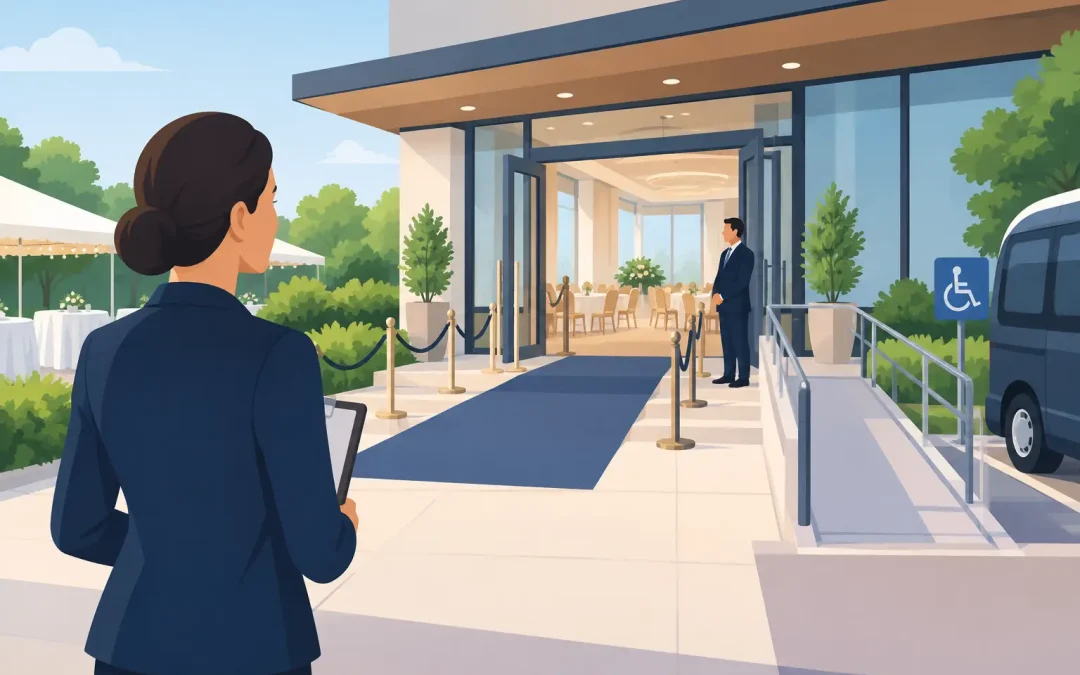
A brilliant event can lose momentum before the first guest arrives if a ute cannot reach the loading area, a lift is too small for an arcade machine, or a jumping castle has nowhere safe to be set up. Venue access planning is the practical work that turns a great entertainment idea into a smooth, high-energy event where the fun arrives on time and stays that way.
For Melbourne parties, school fairs, corporate functions and community events, access is rarely just about finding the front door. It affects delivery timing, equipment choices, safety, guest flow and pack-down. Get it right early and you can spend event day enjoying the action instead of solving avoidable problems in the car park.
Start Venue Access Planning Before You Choose Equipment
The best time to check access is before you lock in every attraction. That does not mean the venue has to be boring or restrictive. It simply means matching the entertainment to the real-world path from the delivery vehicle to its final position.
Ask the venue manager where suppliers enter, whether there is a dedicated loading dock, and how far equipment needs to travel once it is unloaded. A ground-floor function room with nearby parking can suit a wide range of arcade games, photo booths, food machines and inflatable fun. A level-three office space with a narrow passenger lift may still be a fantastic party location, but it may call for lighter or more compact options.
At this stage, share clear details with your hire provider: the venue name and address, room location, access point, event date, bump-in time and any venue rules. Photos of gates, corridors, stairs, lifts and doorways are particularly useful. They can prevent assumptions and help the team recommend entertainment that fits the space and the access route.
Measure the Full Route, Not Just the Event Room
A room may have plenty of floor space, yet be difficult to reach. Measure every point along the delivery route, beginning with the vehicle entry and ending at the setup area. Include the width and height of gates and doors, hallway turns, lift openings, lift interior dimensions and ceiling clearances where relevant.
Pay attention to the details that are easy to miss. A bollard at a driveway entrance, a low awning, a tight corner near reception or a single step at the back entrance can change what is practical. If equipment must travel through a public area, ask whether staff can open alternate doors or reserve a clear path during bump-in.
Stairs need an especially honest conversation. Some items can be carried safely where access allows, while heavier amusement equipment may require level entry, a suitable goods lift or an alternative choice. Trying to force a large attraction through an unsuitable route is not worth the delay, the damage risk or the stress.
Check lifts with the venue, not by guesswork
A lift is only useful if it is available when suppliers arrive, large enough for the item and approved for delivery use. Some buildings restrict goods lift access to certain hours or require a building representative to operate it. Others ask for protective mats or booking paperwork before anything can be moved in.
Confirm the lift’s door width, internal depth, height and weight limit. Also ask whether the lift opens directly onto the event floor or whether there is another corridor and doorway at the other end. These checks take minutes, but they can save a whole event schedule.
Build a Bump-In Window That Has Breathing Room
Access planning is as much about timing as it is about dimensions. A loading bay that is perfect at 8 am may be full of caterers, florists, production crews and venue deliveries at midday. For a busy CBD event, vehicle access can also be affected by traffic, roadworks, parking restrictions and building security procedures.
Book a realistic bump-in window, then allow a buffer for signing in, finding the correct loading entrance, unloading, moving equipment into place and completing setup checks. The more attractions you have, the more valuable that buffer becomes. A staff celebration with a jukebox and slushie machine may need a straightforward setup. A branded activation with multiple games, a photo booth and custom-wrapped equipment needs more coordination.
It helps to appoint one person as the on-site contact. They should have their mobile switched on, know the access route and be authorised to speak with venue staff. This is particularly helpful at schools, offices and public venues where doors may be locked, security may control entry or the event organiser is busy managing other suppliers.
Plan pack-down with the same care
Pack-down often happens when everyone is tired and the venue is ready to close. Confirm the collection time, loading dock availability and any curfew that affects noise or vehicle movements. If a school fair finishes at 3 pm but the grounds must be cleared by 4 pm, suppliers need an unobstructed exit route and enough time to load safely.
Do not let tables, decorations, bins or parked vehicles block the equipment path after the event. A clean route makes pack-down quicker and lets the final moments of the day finish on a high rather than with a logistical scramble.
Think About Power, Surfaces and Setup Space
Good venue access planning continues once the equipment reaches the room or outdoor area. Each attraction needs a safe, practical place to operate, with enough space around it for guests and staff to move comfortably.
For indoor events, identify nearby power outlets, check whether they are on appropriate circuits and avoid relying on extension leads stretched across walkways. The venue may have specific requirements for lead covers, test and tag records or the use of its electrical supply. If the event is outdoors, discuss power availability, weather protection and the distance from the supply point before choosing electric equipment.
Surface conditions matter too. Inflatable attractions need an appropriate, clear setup area and safe anchoring arrangements. Arcade games and pinball machines need stable, level ground. Food-service equipment needs a sensible service location where guests can queue without blocking exits. A photo booth works best where people can gather, pose and share a laugh without creating a bottleneck at the door.
Leave working space around every item. The footprint of a game is not the same as the space needed for players, spectators, cables, queues and accessible movement. This is where a simple floor plan pays off. Mark entrances, emergency exits, food tables, seating, power points and entertainment zones before the room fills up.
Keep Guests Moving and Emergency Paths Clear
The most popular attractions naturally draw a crowd. That is exactly what you want at a fundraiser, family day or product launch, but it needs to be planned so excitement does not turn into congestion.
Place high-traffic entertainment away from emergency exits, fire equipment, main doors and narrow corridors. Give queues room to form without cutting across the bar, buffet or registration desk. At a corporate event, a racing game or claw machine can create great energy near the main activity zone. At a school event, putting lively attractions where supervisors have a clear view can make crowd management easier.
Accessibility deserves the same attention. Consider how guests using mobility aids will enter the venue, move between activities and enjoy the event. Keep pathways clear, avoid cable hazards and provide room at key attractions where possible. Access is not just a compliance item – it helps more people join the fun.
Outdoor Events Need a Weather and Vehicle Plan
Melbourne weather can change its mind quickly. For outdoor venue access planning, check the ground condition, vehicle route and backup options well before event day. Wet grass, soft ovals, steep driveways and uneven parkland can affect where vehicles can travel and where equipment can be installed.
Ask the council, school or venue whether vehicles are permitted on-site and whether there are designated service roads or gates. Confirm any protective requirements for turf, restrictions around trees and underground services, and where vehicles can wait once unloading is complete. If access is limited, a staged delivery plan may be better than trying to bring everything in at once.
A wet-weather alternative is worth having even for summer events. That could mean a covered area, a nearby hall or a revised entertainment mix that suits the available indoor space. The right backup plan keeps the celebration rolling rather than leaving guests watching the forecast.
Give Your Hire Team the Information They Need
The easiest events are built on clear information shared early. When requesting a quote, include the basics, then add the access details that affect delivery and setup. This lets the supplier make practical recommendations rather than simply sending the biggest or flashiest option.
Helpful details include:
- venue address, room or outdoor location, and event date
- delivery and collection windows, including any strict venue deadlines
- loading dock, parking, gate, stairs and lift information
- measurements and photos of narrow or awkward access points
- power availability, surface type and wet-weather arrangements
- venue contacts, security requirements and supplier induction rules
Xtreme Events Group can help match crowd-pleasing entertainment with the realities of your site, whether you are bringing arcade action to an office, creating a school fair full of energy or building a branded experience that gets people talking.
Great events feel effortless to guests because the planning behind them is anything but accidental. Check the route, allow the time, clear the space and let the entertainment do what it does best: bring people together for a seriously memorable day.